For my goodbye from Bandelier we set fire to the forest.
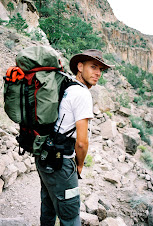
I know, I know, this was a prescribed burn, and yes, they have been planning it for the past 5 years. And when I say "we" set the forest on fire, I might be stretching the collective team effort a bit, but nevertheless, the last outfit that Bandelier National Monument dressed up in (especially for me, no matter what you say) was this
My last two days in Bandelier were spent in flames. More like next to flames but definitely in smoke.
The "Unit 9 prescribed burn", as it was officially referred to, has been in the the making for the past few years. The upper parts of Frijoles canyon have not been burned in years, and a lot of fuel had accumulated over the years- fallen branches, dead trees, grass, layers and layers of dry leaves, low brush. These fuels could catch fire from a lightning strike or a forgotten campfire and would set fire to whole canyon. With the steep canyon walls and the winds that get funneled in the canyon, a fire like that could run wild and would be virtually impossible to stop. "We've been sitting on a keg of powder for the past 3 years" was how the burn-boss put it. A prescribed burn is mainly designed to reduce the ground fuels without hitting the living trees. Sound good, doesn't it... Only problem is fire doesn't really behave that way naturally. It burns wherever it goes. That's why the conditions have to be just right- first it's the weather- you don't want it to be too hot and dry because then the risk of the fire going out of control is much greater. On the other hand, if the ground and the ground fuels are too wet, or it's too cold- nothing at all will burn. So summer and winter are out of the question. Wind is a very dangerous thing- the flames will pick up and spread all over, however, you need a little wind to blow the smoke away from the fire and prevent it from settling on site so the crews can keep working and won't be smoked out. The planners of the fire also consider cloud coverage, humidity, air pollution over the nearby communities, the length of the day (you need to be able to put in a good day's work before it gets dark).Then there is the preparation work. Fire lines are cut and dug through the forest to prevent the fire from spreading, and to contain it to the specific areas. Crews will go in and thin the forest especially in areas that are close to roads. Sometimes dead trees will be cut down and chopped up, and all the dead fall will be piled up to make sure that it all burns and to control the burn. All the archaeological sites and artifacts within the burn area have to be recorded (In Bandelier that's relatively easy, since the park is 90% surveyed as it is), and if there is a danger that they might be damaged from the fire- measures will be taken to protect them- sometimes to the extent of cutting fire lines around them. In our case most of the archaeological sites are prehistoric ruins of small farmhouses- mounds of buried rocky rubble and pottery shards. Fire really didn't pose a danger to those. There are, however, remains of and old wooden bridge over the creek- the remains of an old wagon road that used to run through the park. These needed to be marked and a fire line was cut around them. There is also a historic phone line that hung from trees along the canyon with glass insulators. Dale had to go in and mark all of those trees with flagging tape so they wouldn't be cut down in the thinning process or as part of the fire line. One tree did get cut down accidentally and the glass insulator was cut out of it to save it from the fire.
Once the fire is started, the fire fighters will monitor the burn and make sure it's remaining a surface fire if any tree starts catching fire- they will put it out. Any ground fuels that did not burn through will be piled up to make sure they are totally burned away. If the conditions are right the fire won't climb tree trunks that easily and will keep to the easy stuff like dry grass and the piled up dead fall. According to the experts, you always loose a few trees, but the benefit from clearing the forest floor is much more important.
 There is also a historic phone line that hung from trees along the canyon with glass insulators. Dale had to go in and mark all of those trees with flagging tape so they wouldn't be cut down in the thinning process or as part of the fire line. One tree did get cut down accidentally and the glass insulator was cut out of it to save it from the fire.
Once the fire is started, the fire fighters will monitor the burn and make sure it's remaining a surface fire if any tree starts catching fire- they will put it out. Any ground fuels that did not burn through will be piled up to make sure they are totally burned away. If the conditions are right the fire won't climb tree trunks that easily and will keep to the easy stuff like dry grass and the piled up dead fall. According to the experts, you always loose a few trees, but the benefit from clearing the forest floor is much more important.
Of course, this is just the fire itself. You need a medical plan- after all you are going to have firefighters running around in the woods in smoke and fire, you need a traffic plan- the fire and the smoke might effect the roads in the area and the fire engines need to be able to get around. You need a logistics plan- how do you get water and fuel for the fire engines, what are your fire fighters going to eat?
Point of all this is- It's a big deal.
What made it even bigger, in fact, what made it an incredibly bigger deal was the fact that in 2000, a prescribed burn that was started by the National Park Service got out of control and burned down a whole bunch of houses along a number of streets in the town of Los Alamos. The whole of Los Alamos, White rock and the employee housing area in Bandelier had to be evacuated along with many of the National Laboratory facilities. It took them three weeks to put the fire out and it had consumed huge areas in the national park and in the surrounding National forest. The Cerro Grande fire, as it was named (the name of the peak next to which the burn started), was a horrible disaster and quite a milestone (not a good one) in state-federal relations in New Mexico. The superintendent of Bandelier and the chief of resources were forced to retire, along with the head of the fire division, even though the investigation concluded that the fire was started with conditions within the desired range, and was blown out of control by strong winds that developed after the fire was started. Those winds blew the flames up and turned the fire into a crown fire (fire burning on the tree tops and jumping from tree to tree) Once the fire "jumped the line" (flames crossed the fire line outside of the defined area of the prescribed burn) and was defined a wildfire, the local firefighting units called for backup, and a regional fire-boss took over running the show. The fire was then contained but it was this new burn boss, from the regional office, that made the decision to continue the burn. Additionally, most of the houses that burned down were the ones on which the roofs were covered with a layer of pine needles that wasn't cleared for months. Sparks from the burning forest were carried by the winds and landed on the mat of dry needles. Once the roof caught fire- the house was in flames. The local fire department tried spraying down the roofs with their fire hoses- but had little success. In fact, many say that the fire could have been started by a lightning strike or any number of other reasons, and would have still done the same damage.
That is all very nice, but the bottom line is it was National Park Service personal, out of Bandelier national monument who lit the match, so you can imagine what kind of a reaction you get whenever people in the area heard the words "Bandelier" and "Prescribed burn" in the same sentence.I've been hearing about this prescribed burn since just about my second day in the park. Dale kept telling me that if the fire did end up happening, he would have the opportunity to pull me out of the backcountry and put me to work traffic control- for a real salary, rather than the modest SCA stipend I was supposed to make do with.
It's been on the drawing board for a long time and they've been trying to go for it for the past two years. Because of what happened no one was prepared to take any chances or leave any tiny part of their, excuse me, ass, uncovered. So the conditions had to be nothing short of perfect, and the people had to be nothing less than totally prepared. From the end of the summer on crews were working on cutting fire lines in the forest, dividing the planned "unit 9" into sections and thinning the areas that were close to the roads. It was first scheduled for some time in late September, but the weather turned out to be really wet during the first week of that month and there was no-way anything would burn. Then, when October's chili but sunny and dry weather seemed to be on the right track, massive fires hit California, and a big question mark appeared over the possibility of getting the outside resources- additional fire engines and crews, that the local fire people were counting on in order to cover all bases.
Dale was in charge of traffic control, and had pulled out the plan from last year and updated it. It was quite a big headache for him since, due to how the LE division at Bandelier was already spread thin, he needed to get other law enforcement rangers from other places to come in and work the fire. There are organized ways of putting in orders for additional LE manpower but you need to let the people know ahead of time. With all the question marks, no one could give Dale definite dates until the last minute.
Dale was in charge of traffic control, and had pulled out the plan from last year and updated it. It was quite a big headache for him since, due to how the LE division at Bandelier was already spread thin, he needed to get other law enforcement rangers from other places to come in and work the fire. There are organized ways of putting in orders for additional LE manpower but you need to let the people know ahead of time. With all the question marks, no one could give Dale definite dates until the last minute.
Eventually the date was set for Nov 5. The fires in California were contained, and regional resources were freed, and the weather promised to be within desired parameters.
Dale had me, Joel, Mindy, Matt and Virginia working traffic control and even Carl, the retired chief ranger volunteered to come and help. He also had 4 law enforcement rangers from parks in the region come in to help- working two 12 hour shifts- two rangers at each shift, supervised by a local ranger. This was also the first week of the long awaited new ranger, Dennis. On one hand it was good to have him- since the LE division had been short handed for quite some time now and this was promising to be a busy week, but on the other hand, he needed orientation and the Brian, Dale and Wendy had to take turns riding around with him, showing him around. Monday was supposed to be a day of orientation and preparation for the different crews that were coming in and a test burn was scheduled for that morning. The actual burn was scheduled for Tuesday. On Monday Dale got us all together and gave us a run down on the plan. We were going to close one lane of highway 4, that bordered the park and the burn unit, and have the fire engines and crews working on it. Traffic would be stopped at control points on either end of the burn area, and a pilot car would make runs leading traffic, between those points, on the remaining lane of the highway. We were also going to have a control point ready on forest road 286, a dirt road on the west boundary of the burn unit, in case it got too smoky. Between putting out signs, getting the control points marked and blocking the south lane of the highway, then working all day and closing everything every night when the operation would stop- we were looking at 13 hour shifts. Joel was glad to put in as much work as he could- since that got him one step closer to paying up his loans, but I realized this would make for a very interesting last week since I was scheduled to work all through Thursday and my train was leaving Friday morning, and there would be no time for me to pack up or go through the check out process. Good thing I got all the stuff I didn't want to carry with me and put it in a package. All I had to do was get to the post office and mail it.
Dale had me, Joel, Mindy, Matt and Virginia working traffic control and even Carl, the retired chief ranger volunteered to come and help. He also had 4 law enforcement rangers from parks in the region come in to help- working two 12 hour shifts- two rangers at each shift, supervised by a local ranger. This was also the first week of the long awaited new ranger, Dennis. On one hand it was good to have him- since the LE division had been short handed for quite some time now and this was promising to be a busy week, but on the other hand, he needed orientation and the Brian, Dale and Wendy had to take turns riding around with him, showing him around. Monday was supposed to be a day of orientation and preparation for the different crews that were coming in and a test burn was scheduled for that morning. The actual burn was scheduled for Tuesday. On Monday Dale got us all together and gave us a run down on the plan. We were going to close one lane of highway 4, that bordered the park and the burn unit, and have the fire engines and crews working on it. Traffic would be stopped at control points on either end of the burn area, and a pilot car would make runs leading traffic, between those points, on the remaining lane of the highway. We were also going to have a control point ready on forest road 286, a dirt road on the west boundary of the burn unit, in case it got too smoky. Between putting out signs, getting the control points marked and blocking the south lane of the highway, then working all day and closing everything every night when the operation would stop- we were looking at 13 hour shifts. Joel was glad to put in as much work as he could- since that got him one step closer to paying up his loans, but I realized this would make for a very interesting last week since I was scheduled to work all through Thursday and my train was leaving Friday morning, and there would be no time for me to pack up or go through the check out process. Good thing I got all the stuff I didn't want to carry with me and put it in a package. All I had to do was get to the post office and mail it.
We were missing about 200 plastic traffic cones, but they were ordered from a company and were on their way. At 14:00 we were all scheduled for a briefing at Technical Area 49 (TA49), the joint fire management facility for the park, the national forest and the lab. As we were approaching the entrance station, on our way out, a big semi-truck pulled up from the highway and a moment later Mindy, who was working the entrance station that afternoon, got on the radio and announced "Hey, LE people! there's a big semi here that says he's got 200 traffic cones. Anyone know anything about this?"
Dale got on the radio and told her that since we were approaching the entrance station she should instruct the truck driver to follow us (we needed the cones at TA49 anyway). And so we were all headed up highway 4 at high speed- Dale and Dennis and I in one ranger car, the imported LE rangers following us in two ranger cars and finally a big semi truck with traffic cones- one long law enforcement convoy .We were running a little late so Dale was flooring it and the Semi truck apparently had trouble keeping up, because when we all turned into the gate way to TA49 he didn't see us and kept on along the highway trying to catch up with the convoy that was no-longer there. The first one to notice was Dennis. We were all walking towards the crowd of fire fighters that were already assembled in a half circle for the briefing around a map of Unit 9 that was taped to the outside of a hanger door, when he suddenly said- "Wasn't that truck supposed to follow us in here?!" That caught Dale, who was approaching the circle of rough tough fire fighters in a John Wane stroll, totally off guard. He was wearing a face that said "I was already pissing on forest-fires when you all were still playing with matches in the sand box", and Dennis's question made him change into a "What the fu#$?!!" face. But just for a moment. I don't know if it was more important to Dale that Dennis be in the briefing, or that subconsciously he trusted me more than the young ranger he had only met the day before, but to my surprise he threw the keys over to me and said "Catch up with him, will ya". I didn't need to be asked again, and catching a glimpse of Dennis's disappointed face, I ran to the ranger car and took off. To any of you who have trouble visualizing this, the only difference between a ranger car and a police car (siren, cool lights, assortment of cool toys and everything) is that it has "park ranger" written in green on the side. That and the fact that it's a 4X4 SUV, rather than a Sedan type vehicle. I could see the truck ahead of me on the highway, heading north, but there were two cars between me and him, and he was not noticing me (I'll give him the benefit of blaming the curves, simply since I'll have a better opportunity to call him a moron in a second). We were approaching an intersection, and I was really hoping he would stop there, or at least make the turn towards Loa Alamos, because I new that if he kept going straight and start climbing to the upper regions there would only be a couple of places where he could turn around and they were not obviously noticeable from the highway. On the other hand, I was driving a police car at high speed, so I wasn't totally disappointed when he kept on heading straight towards the climb. The good news was that both cars between us did make the turn into Los Alamos so I was directly behind him now.
As he started climbing the winding curves of highway 4, I tried to get his attention by flashing my headlights, but I guess he was too busy navigating his vessel. "You're in a police car!" I'm sure some of you are thinking, but to my disappointment, there isn't a glowing red lever in the center of the dashboard with the words "Cool police lights" blinking over it in neon. I had no-idea how to turn those on. In the mean time, the subject of my chase had already passed two pullouts where it was possible to turn that big-rig around and was on his way to the last one for about 10 miles. I had to get on the radio and report my predicament to Dale. "Did you try turning on the flashing lights?" he whispered into the radio. "I have no idea how to do that!" I yelled over the static of bad reception and the noise of the struggling truck in front of me. "There is a small red lever on the top left corner of the radio panel. Push it all the way to the right and give me a call if you need anything else." He was whispering again and I realized he was standing in the audience of the briefing that had already started. It took about 5 more minutes of me driving with flashing lights and trying to drive into the view of his rear view mirrors on the winding curves, (the car behind me had no idea what the hell was going on), for us to reach a relatively straight run and for him to notice me and pull over on the narrow shoulder. I was a little disappointed because during that time I figured out how to operate the siren and speaker system, and was about to disturb the serenity of the woods around us with my official voice "You in the Semi, Pull over!"
Dale got on the radio and told her that since we were approaching the entrance station she should instruct the truck driver to follow us (we needed the cones at TA49 anyway). And so we were all headed up highway 4 at high speed- Dale and Dennis and I in one ranger car, the imported LE rangers following us in two ranger cars and finally a big semi truck with traffic cones- one long law enforcement convoy .We were running a little late so Dale was flooring it and the Semi truck apparently had trouble keeping up, because when we all turned into the gate way to TA49 he didn't see us and kept on along the highway trying to catch up with the convoy that was no-longer there. The first one to notice was Dennis. We were all walking towards the crowd of fire fighters that were already assembled in a half circle for the briefing around a map of Unit 9 that was taped to the outside of a hanger door, when he suddenly said- "Wasn't that truck supposed to follow us in here?!" That caught Dale, who was approaching the circle of rough tough fire fighters in a John Wane stroll, totally off guard. He was wearing a face that said "I was already pissing on forest-fires when you all were still playing with matches in the sand box", and Dennis's question made him change into a "What the fu#$?!!" face. But just for a moment. I don't know if it was more important to Dale that Dennis be in the briefing, or that subconsciously he trusted me more than the young ranger he had only met the day before, but to my surprise he threw the keys over to me and said "Catch up with him, will ya". I didn't need to be asked again, and catching a glimpse of Dennis's disappointed face, I ran to the ranger car and took off. To any of you who have trouble visualizing this, the only difference between a ranger car and a police car (siren, cool lights, assortment of cool toys and everything) is that it has "park ranger" written in green on the side. That and the fact that it's a 4X4 SUV, rather than a Sedan type vehicle. I could see the truck ahead of me on the highway, heading north, but there were two cars between me and him, and he was not noticing me (I'll give him the benefit of blaming the curves, simply since I'll have a better opportunity to call him a moron in a second). We were approaching an intersection, and I was really hoping he would stop there, or at least make the turn towards Loa Alamos, because I new that if he kept going straight and start climbing to the upper regions there would only be a couple of places where he could turn around and they were not obviously noticeable from the highway. On the other hand, I was driving a police car at high speed, so I wasn't totally disappointed when he kept on heading straight towards the climb. The good news was that both cars between us did make the turn into Los Alamos so I was directly behind him now.
As he started climbing the winding curves of highway 4, I tried to get his attention by flashing my headlights, but I guess he was too busy navigating his vessel. "You're in a police car!" I'm sure some of you are thinking, but to my disappointment, there isn't a glowing red lever in the center of the dashboard with the words "Cool police lights" blinking over it in neon. I had no-idea how to turn those on. In the mean time, the subject of my chase had already passed two pullouts where it was possible to turn that big-rig around and was on his way to the last one for about 10 miles. I had to get on the radio and report my predicament to Dale. "Did you try turning on the flashing lights?" he whispered into the radio. "I have no idea how to do that!" I yelled over the static of bad reception and the noise of the struggling truck in front of me. "There is a small red lever on the top left corner of the radio panel. Push it all the way to the right and give me a call if you need anything else." He was whispering again and I realized he was standing in the audience of the briefing that had already started. It took about 5 more minutes of me driving with flashing lights and trying to drive into the view of his rear view mirrors on the winding curves, (the car behind me had no idea what the hell was going on), for us to reach a relatively straight run and for him to notice me and pull over on the narrow shoulder. I was a little disappointed because during that time I figured out how to operate the siren and speaker system, and was about to disturb the serenity of the woods around us with my official voice "You in the Semi, Pull over!"
The driver got out of his cab and said "I guess I passed you. You were going pretty fast". Honestly I couldn't argue with that, but it still didn't explain why he kept going after the intersection. To make it short, I told him to follow me to the nearest pullout where we turned around and headed back to TA49 with constantly making sure he was behind me. The whole adventure only took about 40 minutes so when I finally did park the car there was still an assembled crowd of fire fighters to join. By the giggles and smiles that welcomed my grand entrance I realized that Dale's radio wasn't very quiet when I reported in, and that everyone had witnessed the crash course in "how to turn on the police lights".
The only one that didn't know what was going on was Fred, the chief ranger, who's baffled look bounced from me to Dale to the ranger car. He wasn't annoyed, he just couldn't decide if he wanted to know why his very civilian SCA had just gotten out of the drivers seat of a law enforcement vehicle. I guess he decided not to know, because he turned his head and seemed very interested in the "accommodations for outside crews" part of the briefing.
The only one that didn't know what was going on was Fred, the chief ranger, who's baffled look bounced from me to Dale to the ranger car. He wasn't annoyed, he just couldn't decide if he wanted to know why his very civilian SCA had just gotten out of the drivers seat of a law enforcement vehicle. I guess he decided not to know, because he turned his head and seemed very interested in the "accommodations for outside crews" part of the briefing.
That night Gumaz, Joel, Kevin Molly and I piled up in Gumaz's car and went down to Santa Fe to hear the Old Crow Medicine Show. Ignition was set for 10am the next morning, and all the traffic people were supposed to be ready for work at 6:30 to start putting out signs and cones on the highway. The show was excellent. During the break I guy got on stage and announced that he was selling tickets for a the Dirty Dozen Brass Band who were playing at the Santa Fe brewing company the next night, for only 9$. Gumaz looked at me and I said- "I'm gonna have to get some sleep!", but at the end of the break I handed him a ticket. We all ended up buying tickets. We were having such a great time that even though we were burning hours of sleep we were all happy to go grab a beer after it. It was really a great night and I laughed and danced like I hadn't done in a while. We all did.
It was pretty cold the next morning when I met Dale and the others at the maintenance yard and we started loading the signs on the truck. Then we drove up to to the highway and started putting them out.  I drove the truck, and Tillman, one of the imported LEs, rode in the back and unloaded the signs as we went along. Then came the long proccess of laying out the cones. We spread them out on the side of the road and were going to move them to the middle when right before the fire crews would light. I got to ride in the back of a pickup too. My american expperience wouldn't have been complete without it. At 9:00 Dale went down to TA49 for the morning briefing and we had nothing to do but sit around and wait. 10 minutes later we heard "No Burn" over the radio, and Dale told us all to come down to TA49.
  When we got out of the cars and joined the circle of fire people, the meteorologist was already half way done explaining about the cold weather and the lack of wind that would lock the smoke cloud in place. It was even colder than when I got up that morning...
Now we just had to collect all the cones back in the trucks (the signs could just lay on the side of the road) and enjoy the free afternoon. I was quite happy about it since I didn't get much sleep the night before and I had volunteered to be the sober driver to the show that evening (Joel did it the first time). So I enjoyed an afternoon nap that day.
 I drove the truck, and Tillman, one of the imported LEs, rode in the back and unloaded the signs as we went along. Then came the long proccess of laying out the cones. We spread them out on the side of the road and were going to move them to the middle when right before the fire crews would light. I got to ride in the back of a pickup too. My american expperience wouldn't have been complete without it. At 9:00 Dale went down to TA49 for the morning briefing and we had nothing to do but sit around and wait. 10 minutes later we heard "No Burn" over the radio, and Dale told us all to come down to TA49.
  When we got out of the cars and joined the circle of fire people, the meteorologist was already half way done explaining about the cold weather and the lack of wind that would lock the smoke cloud in place. It was even colder than when I got up that morning...
Now we just had to collect all the cones back in the trucks (the signs could just lay on the side of the road) and enjoy the free afternoon. I was quite happy about it since I didn't get much sleep the night before and I had volunteered to be the sober driver to the show that evening (Joel did it the first time). So I enjoyed an afternoon nap that day.
Joel Gumaz and I headed out an hour and a half earlier and went to visit Moe who had worked in the park earlier in the season. We hung out, grilled some chicken and made a tray of drumsticks disappear. Then we went to meet Kevin, Molly and Beth at the show. Another great night. Good music, lot's of dancing, and a late night.
The best part of it was that we didn't have to meet that early the next morning, since all the signs were out and the cones were already loaded on the trucks.
The best part of it was that we didn't have to meet that early the next morning, since all the signs were out and the cones were already loaded on the trucks.
Setting up the next morning was quick and painless and by 8:00am the morning comuters on highway4 were driving past a bunch of government employees in orange vests sitting on a fence and doing nothing. As we waved them by, we couldn't help but feeling proud about making them feel good about their tax dollars.
Dale was of to the morning breifing and then finally, at 10:30 he called us on the radio and said "We're on. Move those cones to the middle of the road and get ready to stop traffic. I'll be there in 15 minutes". Not long afterwards, the fire engines and crew started arriving and spread out along the highway. Matt and I took one control point, and Joel and Virginia were stopping traffic at the other one. The retired chief ranger was driving the pilot car.
They were going to start the burn at our end, so most of the fire crews were assembling around Mine and Matt's control point. By the time Dale showed up we had a bit of a traffic jam at our end between the line of cars that were waiting to follow the pilot car, and the crowd of fire fighters and engines. He got there right in time to see three big trucks unload 30 convicts from the state prison's fire fighting program. I'm not sure how the tax payers that were waiting in line felt about the pirate-eyed men wearing orange jump suits with "state prison" written on the back, and holding an assortment of tools of destruction- Axes, Pulaskis, shovels and even two Chain saws, all lined up on the side of the road with nothing but a hnadfull of traffic cones to seperate them from the law obiding citizens of Los Alamos county. I have to say that the convicts turned out to be a hard working bunch of fire fighters, helpful and responsible and all the other crews were happy to have them on board.
The moment we were all waiting for came with no trumpets or formal announcement. It just got very smokey very quickly. Though I had never seen anything like it before in my life, my watering eyes washed away the excitement relatively quickly. More than a few fire fighters were nice enough to hide the laughter as I waved them through the control point with tears in my eyes. Only a couple rolled down their window and told me I shouldn't cry, and if it meant so much to me, they would come back later that day to visit me. The rest of the day was pretty boring. We traded spots and took turns driving the pilot car. We exchanged nonsenses over the radio and shared goodies from our packed lunch. The drivers we were stopping gave us a lot less of an attitude than we expected, and except for the occasional "You gonna burn down the town again?!" we were greeted mostly with patience and polite disappointment. The last smartass of the day that gave one of us the "burning the town down" line, recieved the following answer: "Well, it's not on the schedule untill Friday, but since it means so much to you, I'll see what I can do about bumping it ahead. I just hope the weather is right for town-torching tomorrow. You might want to check with me again in the morning". Which one of us it was, is a secret I'll take with me to the grave.
The day ended really late. By the time all torching activities were stopped and the crews all hiked their way out of the forest, is was well and dark outside, and the comuter traffic from Los Alamos out was lined up so far back you couldn't see the end of the line. When we finally opened the road- walking in the middle of the highway, moving traffic cones to the shoulder it was just one long line of cars driving past us. That was also when we found out some worrying news. Gumaz, who got fire certified back in the begining of the season (Joel and I were both SOO envy), was put on the night watch. After all the activities are stopped for the day, and the night chill calms the fire down, one crew is left out to keep an eye on everything. On it's own, there's nothing wrong with working the night shift, but we had planned to have his birthday party and my goodbye party on the following evening, and he would not be able to attend. We had nothing to do but wish him a good night and drive home.
The view, as we were driving home was simply surreal. The moon was just rising and the combination of the smoke and the dying flames from the forest made a ghostly image that no camera could capture.
They were going to start the burn at our end, so most of the fire crews were assembling around Mine and Matt's control point. By the time Dale showed up we had a bit of a traffic jam at our end between the line of cars that were waiting to follow the pilot car, and the crowd of fire fighters and engines.
 He got there right in time to see three big trucks unload 30 convicts from the state prison's fire fighting program. I'm not sure how the tax payers that were waiting in line felt about the pirate-eyed men wearing orange jump suits with "state prison" written on the back, and holding an assortment of tools of destruction- Axes, Pulaskis, shovels and even two Chain saws, all lined up on the side of the road with nothing but a hnadfull of traffic cones to seperate them from the law obiding citizens of Los Alamos county. I have to say that the convicts turned out to be a hard working bunch of fire fighters, helpful and responsible and all the other crews were happy to have them on board.
The moment we were all waiting for came with no trumpets or formal announcement. It just got very smokey very quickly. Though I had never seen anything like it before in my life, my watering eyes washed away the excitement relatively quickly. More than a few fire fighters were nice enough to hide the laughter as I waved them through the control point with tears in my eyes. Only a couple rolled down their window and told me I shouldn't cry, and if it meant so much to me, they would come back later that day to visit me. The rest of the day was pretty boring. We traded spots and took turns driving the pilot car. We exchanged nonsenses over the radio and shared goodies from our packed lunch. The drivers we were stopping gave us a lot less of an attitude than we expected, and except for the occasional "You gonna burn down the town again?!" we were greeted mostly with patience and polite disappointment. The last smartass of the day that gave one of us the "burning the town down" line, recieved the following answer: "Well, it's not on the schedule untill Friday, but since it means so much to you, I'll see what I can do about bumping it ahead. I just hope the weather is right for town-torching tomorrow. You might want to check with me again in the morning". Which one of us it was, is a secret I'll take with me to the grave.
The day ended really late. By the time all torching activities were stopped and the crews all hiked their way out of the forest, is was well and dark outside, and the comuter traffic from Los Alamos out was lined up so far back you couldn't see the end of the line. When we finally opened the road- walking in the middle of the highway, moving traffic cones to the shoulder it was just one long line of cars driving past us. That was also when we found out some worrying news. Gumaz, who got fire certified back in the begining of the season (Joel and I were both SOO envy), was put on the night watch. After all the activities are stopped for the day, and the night chill calms the fire down, one crew is left out to keep an eye on everything. On it's own, there's nothing wrong with working the night shift, but we had planned to have his birthday party and my goodbye party on the following evening, and he would not be able to attend. We had nothing to do but wish him a good night and drive home.
The view, as we were driving home was simply surreal. The moon was just rising and the combination of the smoke and the dying flames from the forest made a ghostly image that no camera could capture.
When we arrived the next morning, for my last day of work, Joel and I set the traffic cones and then walked into what had become a haunted forest. The trees were not harmed, but the ground was all black, and there was smoke everywhere. Here and there there were still the smoldering remains of a downed log that burned all night. One of the dead trees that caught fire the day before burned to the ground throughout the night. Even it's roots burned away, but the ground around them stayed in tact, so you could see the imprint of the roots. Of course neither of us gave up the opportunity to pee on smoldering ashes.
Most of the work for that day was along forest road 289, so the highway stayed open most of the day except for a two hour period when the smoke was making it a little dangerous and we ran the pilot car to make sure everyone was driving slowly enough. Us traffic people were just standing at the control points slowing traffic down and making sure the drivers knew what they were driving into.
Joel got most boring traffic point at graduation flats on the forest road. He could see nothing of the fire action, and very little traffic came through.  I think he enjoyed the quiet for a while and was practicing his harmonica skills. He did get some excitement when the hellitach crew used graduation flats as a landing area for their helicopter.
  On fire fighting scenarios the helicopter is used to deliver fire fighters to remote areas for water dumps. The helitech crew is also very good at directing aircraft water drops. On a prescribed burn, however, apart from their role as good scouts the helitech crew is also in charge of lighting the fire in areas that are hard to access on foot- steep slopes and deep canyons. To do that, they shoot ping pong balls full of fuel at the the area they want to catch fire. Yes, you don't have to read that again. You understood corectly. Ping Pong ball full of fuel. I think that was the moment when Joel made his final decision to become a fire fighter.
 I think he enjoyed the quiet for a while and was practicing his harmonica skills. He did get some excitement when the hellitach crew used graduation flats as a landing area for their helicopter.
  On fire fighting scenarios the helicopter is used to deliver fire fighters to remote areas for water dumps. The helitech crew is also very good at directing aircraft water drops. On a prescribed burn, however, apart from their role as good scouts the helitech crew is also in charge of lighting the fire in areas that are hard to access on foot- steep slopes and deep canyons. To do that, they shoot ping pong balls full of fuel at the the area they want to catch fire. Yes, you don't have to read that again. You understood corectly. Ping Pong ball full of fuel. I think that was the moment when Joel made his final decision to become a fire fighter.
There was a lot of action in the forest, that day, and very little action on the road.

We were all very happy when operations for the day were shut down by 5:30 and we didn't have to move the cones in the dark, with anxious-to-get-home drivers zipping by.
We all drove down to the park and were going to meet later at Joel and Gumaz's for my good bye party and Gumaz's birthday party which Gumaz was not going to be able to attend. I was leaving in the morning so I had to check out with Dale first, and give back all of my gear, and get started on cleaning my apartment (Tori was going to check me out of my apartment in the morning). After I showered and packed up all of the leftover food in my fridge I went up to their place and found both Joel and Gumaz there. Gumaz was able to get someone to switch him on the night shift, so it was going to be a full house after all.
It was a great goodbye party. We cooked, like usual, and drank, like usual.
Everyone was tired from a long day of working the fire (Gumaz, Kevin and Beth actually worked fire), and yet, it was still great- there was good cooking, good drinking and a lot of laughs. Even John Mack, Chief of the resources division, came around to say goodbye, and drank quite well.
Tori got me checked out in the morning. I believe there was a hint of a teer in the side of her eye.
At Noon, Shanon picked me and my backpack up and drove me to the train station in Lamy, not before I said goodbye to everyone, one last time, over the radio.
I don't know what I was expecting, but we had to drive past Santa Fe on I25, then get on a state highway, and finally on a county road. We reached a train station that hasn't changed much since the 1880's, when it was built.
That's when I said goodbye to New Mexico, got on a train, and started my long way home.
We all drove down to the park and were going to meet later at Joel and Gumaz's for my good bye party and Gumaz's birthday party which Gumaz was not going to be able to attend. I was leaving in the morning so I had to check out with Dale first, and give back all of my gear, and get started on cleaning my apartment (Tori was going to check me out of my apartment in the morning). After I showered and packed up all of the leftover food in my fridge I went up to their place and found both Joel and Gumaz there. Gumaz was able to get someone to switch him on the night shift, so it was going to be a full house after all.
It was a great goodbye party. We cooked, like usual, and drank, like usual.

Everyone was tired from a long day of working the fire (Gumaz, Kevin and Beth actually worked fire), and yet, it was still great- there was good cooking, good drinking and a lot of laughs.
Tori got me checked out in the morning. I believe there was a hint of a teer in the side of her eye.
At Noon, Shanon picked me and my backpack up and drove me to the train station in Lamy, not before I said goodbye to everyone, one last time, over the radio.
I don't know what I was expecting, but we had to drive past Santa Fe on I25, then get on a state highway, and finally on a county road. We reached a train station that hasn't changed much since the 1880's, when it was built.
That's when I said goodbye to New Mexico, got on a train, and started my long way home.


 When I got to my destination, finding a place to get out was a bit of a challenge. I climbed out and up a rocky slope, and found a ledge to deflate the boat on. I also had my lunch as I waited for the boat to dry. Then I folded it all up and stuffed it back in the backpack. I had 8 km ahead of me. All up canyon. Two of which were off trail on a rocky dry stream bed. But first I had to get trough (or around) the vegetation.


 I kept on walking along the fence. It's just a straight line that ignores all topography so I was climbing up and down some pretty cliffy steep slopes, but it was beautiful. The clouds that were coming in, on the other hand, were a lot less beautiful and seemed very determined in their movement. The forecast for that day included a chance of snow towards the late afternoon, and so it wasn't long before I headed down back to my cabin in Capulin canyon. At around 5 that evening I was sitting and reading at my kitchen table (it's actually the only table, used for many things- from writing daily reports to packing up my backpack. I only call it The kitchen table whenever I'm thinking of food, but that is pretty much always).

 That night there was a gathering at Gumas and Joel's house. The official excuse was that Heather was leaving and this was her good bye dinner. Heather is a seasonal fire fighter and her season was over. Her husband, Michael, came down from Idaho, and they were going to drive home together. Honestly, we don't need excuses to gather or have dinner, and since turkey was on the menu, and Thanks giving is a holiday when everyone goes home to their families, and no-one would be around then, the evening was very quickly presented as our early thanks giving dinner. Michael turned to be an extremely friendly and funny guy. Gumas and Joel and I were all standing in the kitchen preparing stuff (no real cooking had started since Heather and Michael were bringing the turkey), when Heather came in, but before she could go past "hey guys, ho..." her husband hurried past her, walked to the middle of the kitchen and with a big smile said- "hi I'm Michael!". Then he pulled out the turkey and said- "Let's cook". It was obvious this was going to be a fun evening. Michael rubbed the turkey with olive oil. Then Gumas suggested pushing slices of lemon underneath it's skin. Then I remembered an idea that Joel had told me about. I took my bear can that was only missing about three sips, and had Joel top it off with bourbon (cheap, rough Kentucky Bourbon). Then we put it in the middle of the pan and sat the turkey on it for about 2 hours in the oven.


 When it got dark the sky was occasionally lit by the count down burn. All the balloons firing their burners at the same time.
 The morning rays shining onto the Caldera over the road that leads to the park.